Solid Form Screening and Crystallization Process Development of a Clinical Phase II API
Abhijeet S. Sinha, Michael Morgen, and Arianna Nejely
Lonza
PURPOSE
Late-stage unexpected appearance of new solid forms of an API is costly and detrimental to meeting tight development timelines. In this case, inconsistency of the solid form was noted during manufacture of registration batches of Form 1. Solid form screening coupled with crystallization process development identified the lead form.
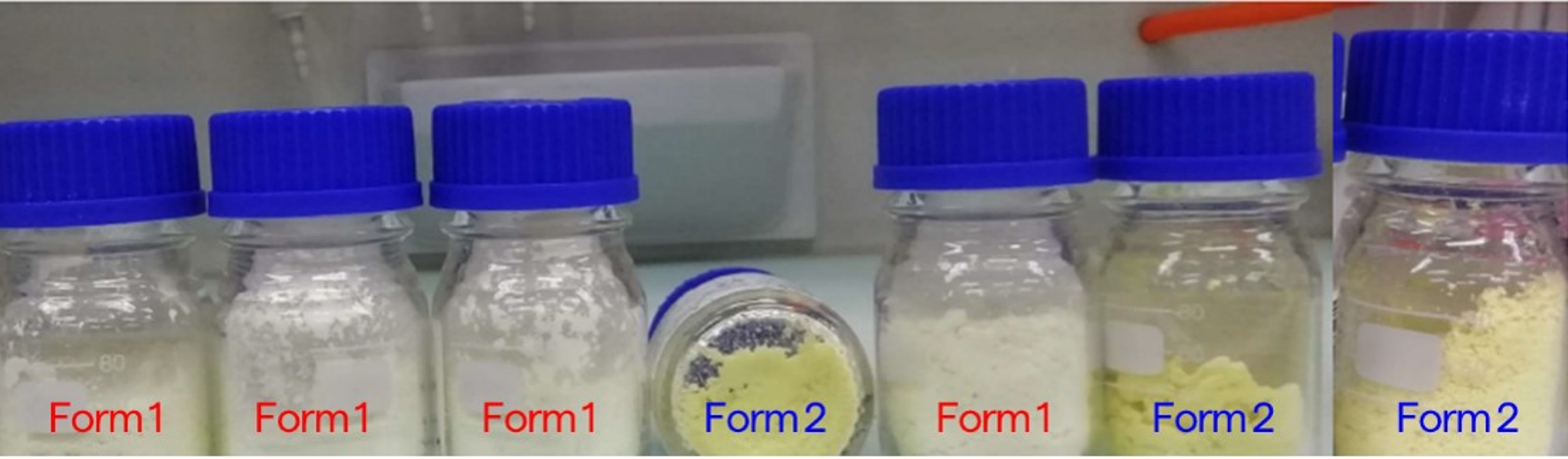
Material from different registration batch campaigns
OBJECTIVES
- Characterize the newly observed form of the drug
- Fully map out the solid form landscape of the drug (possible new forms within the process relevant space and their relationship)
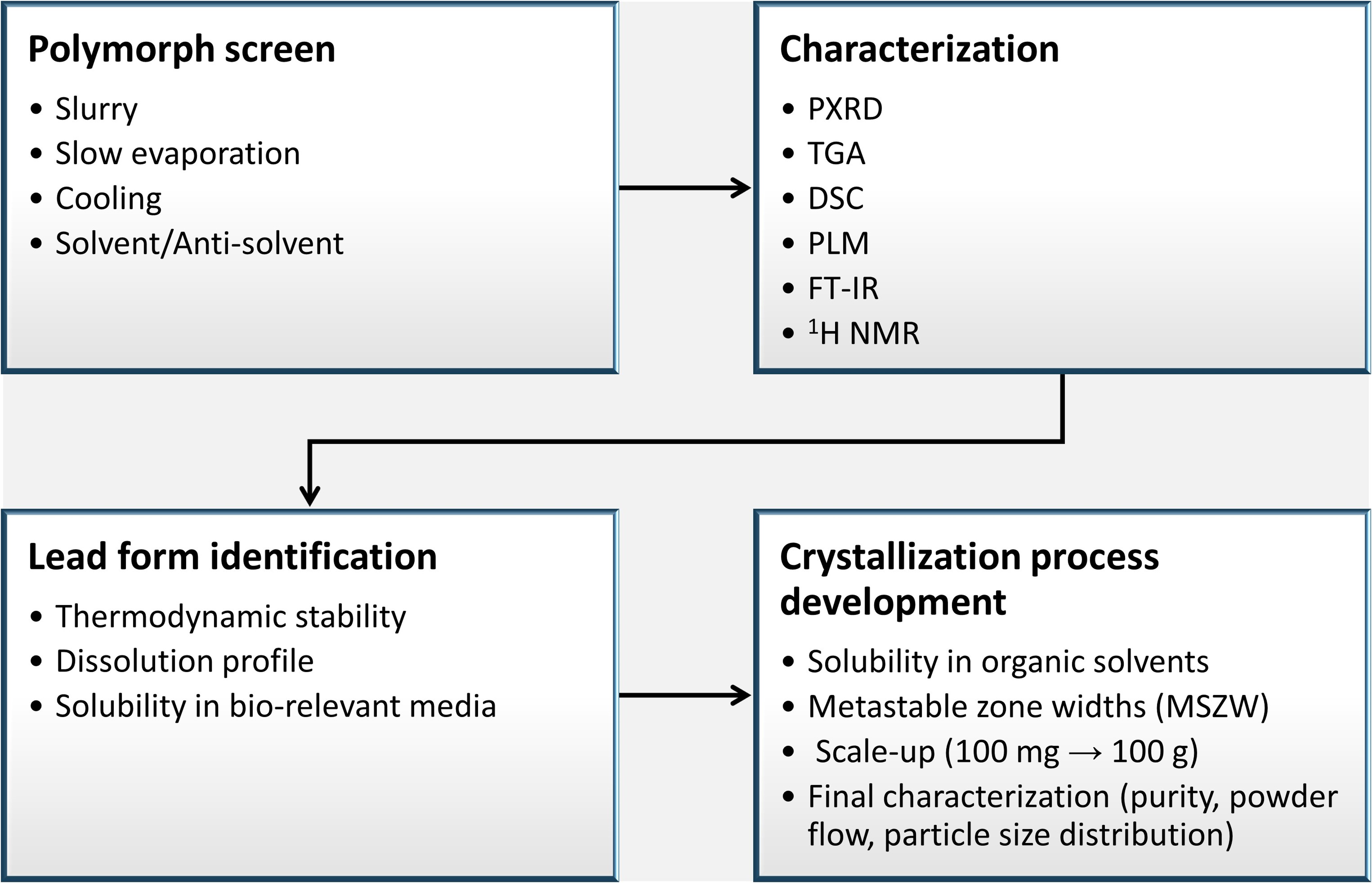
- Develop a robust scalable crystallization process for reliably manufacturing the preferred drug form
METHODS
RESULTS
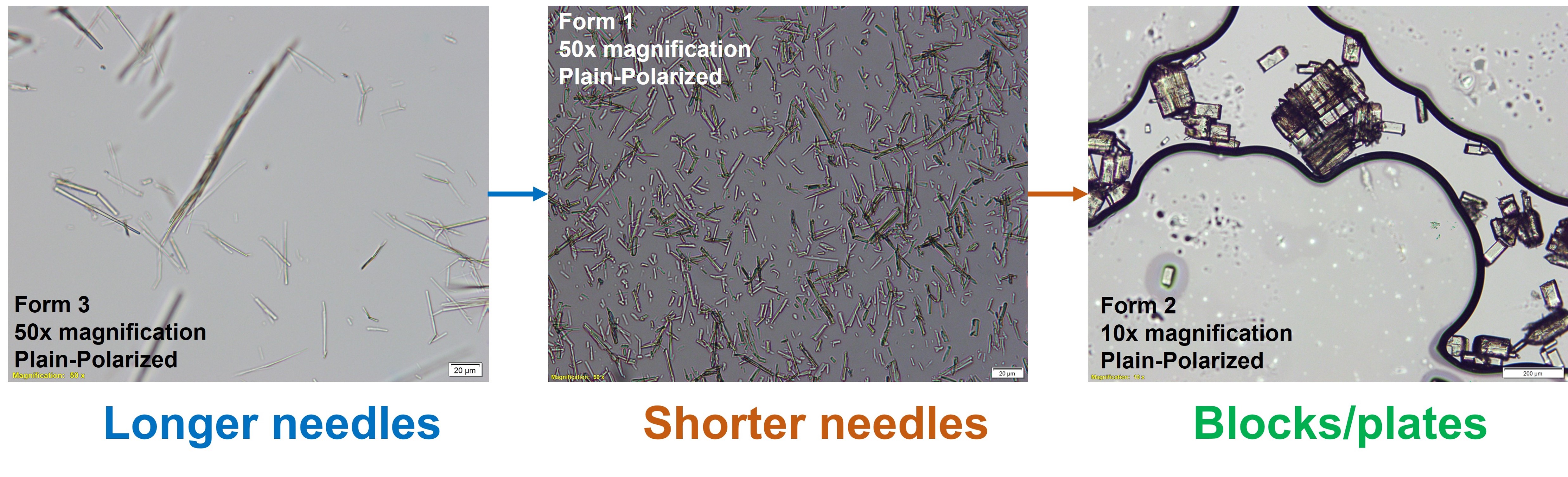
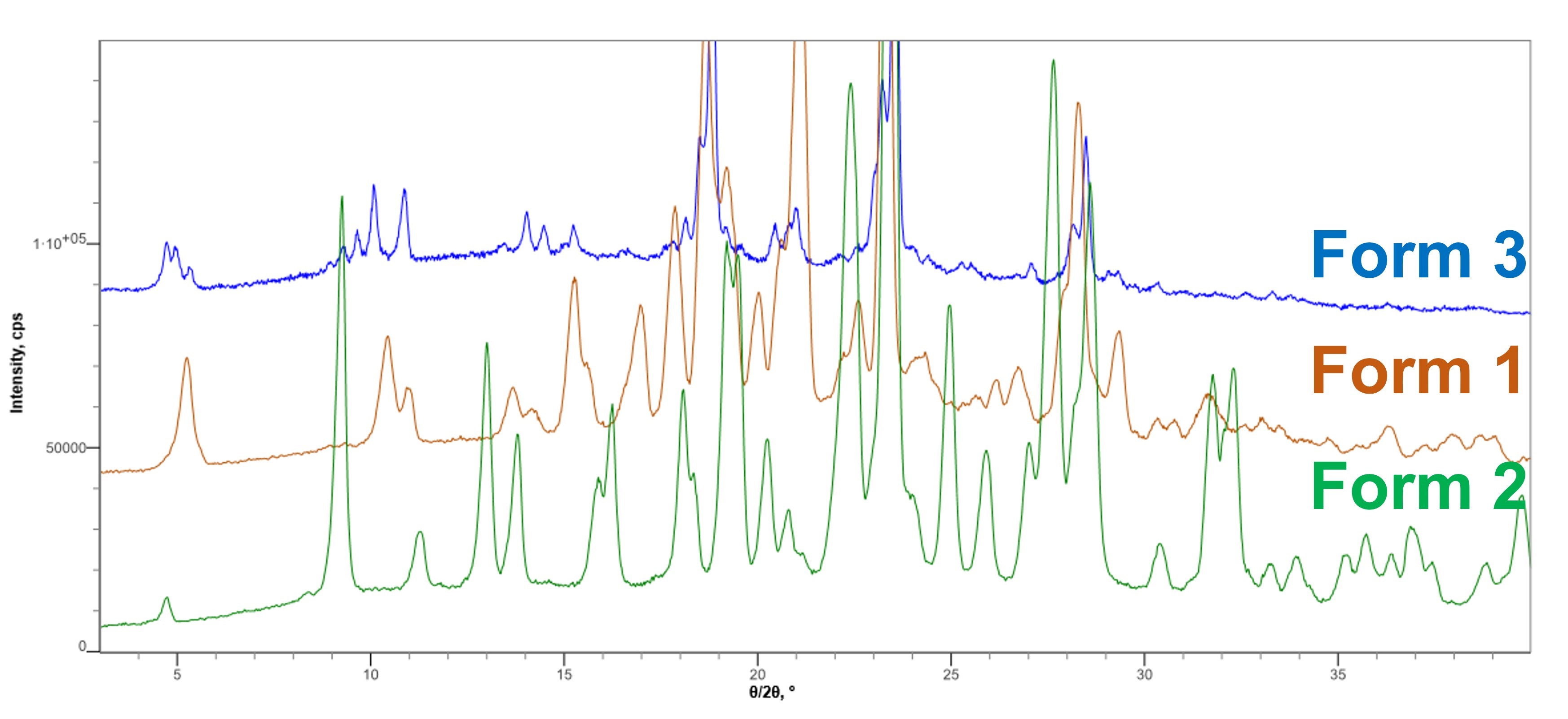
Change in form of drug clearly identified by PLM and PXRD
10-Day slurry of Form 1 in different solvents
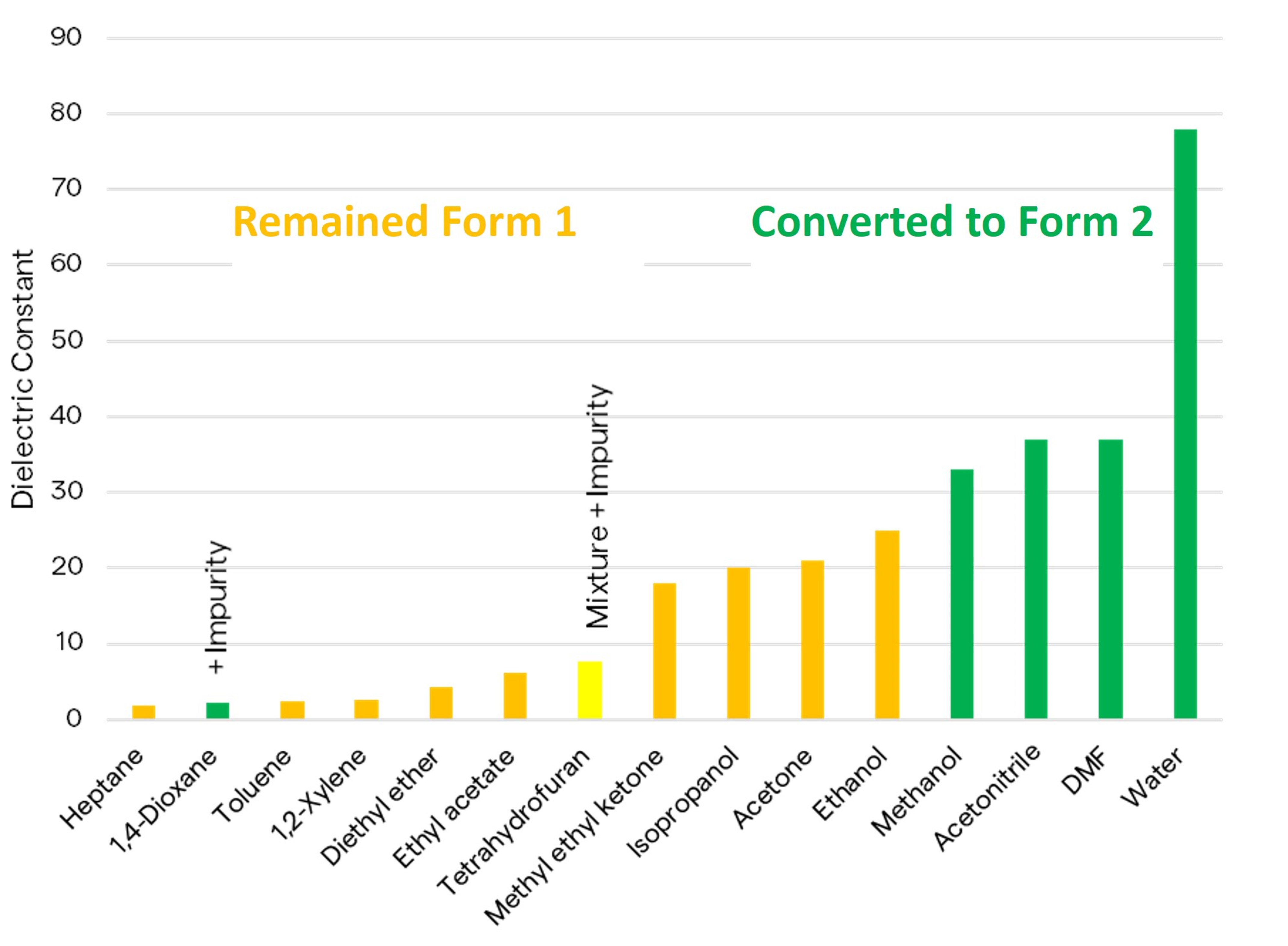

Increasing dielectric constant
Conversion of Form 1 to Form 2 is solvent dependent
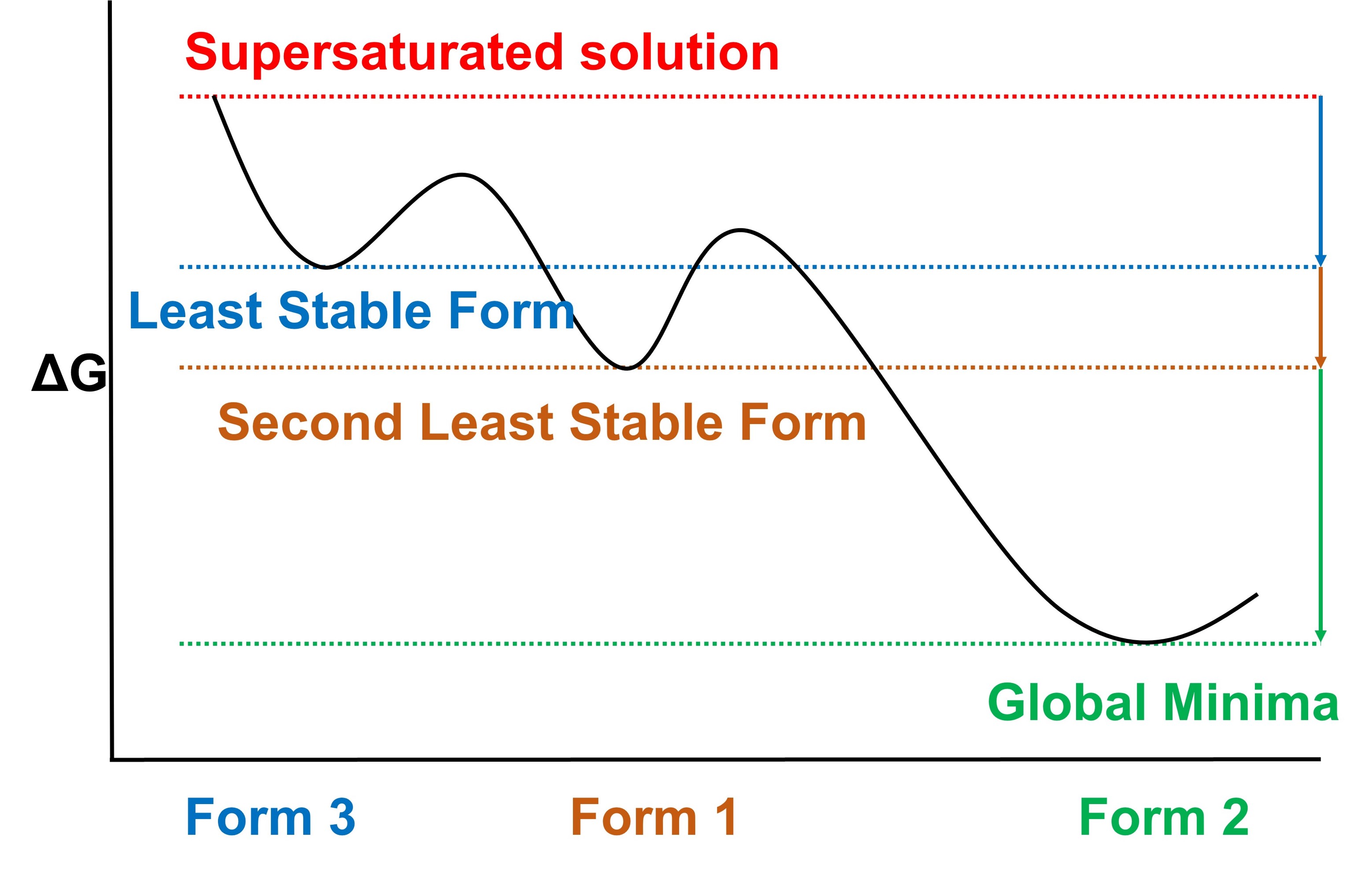
Hypothetical diagram of energy states following Ostwald’s law of stages
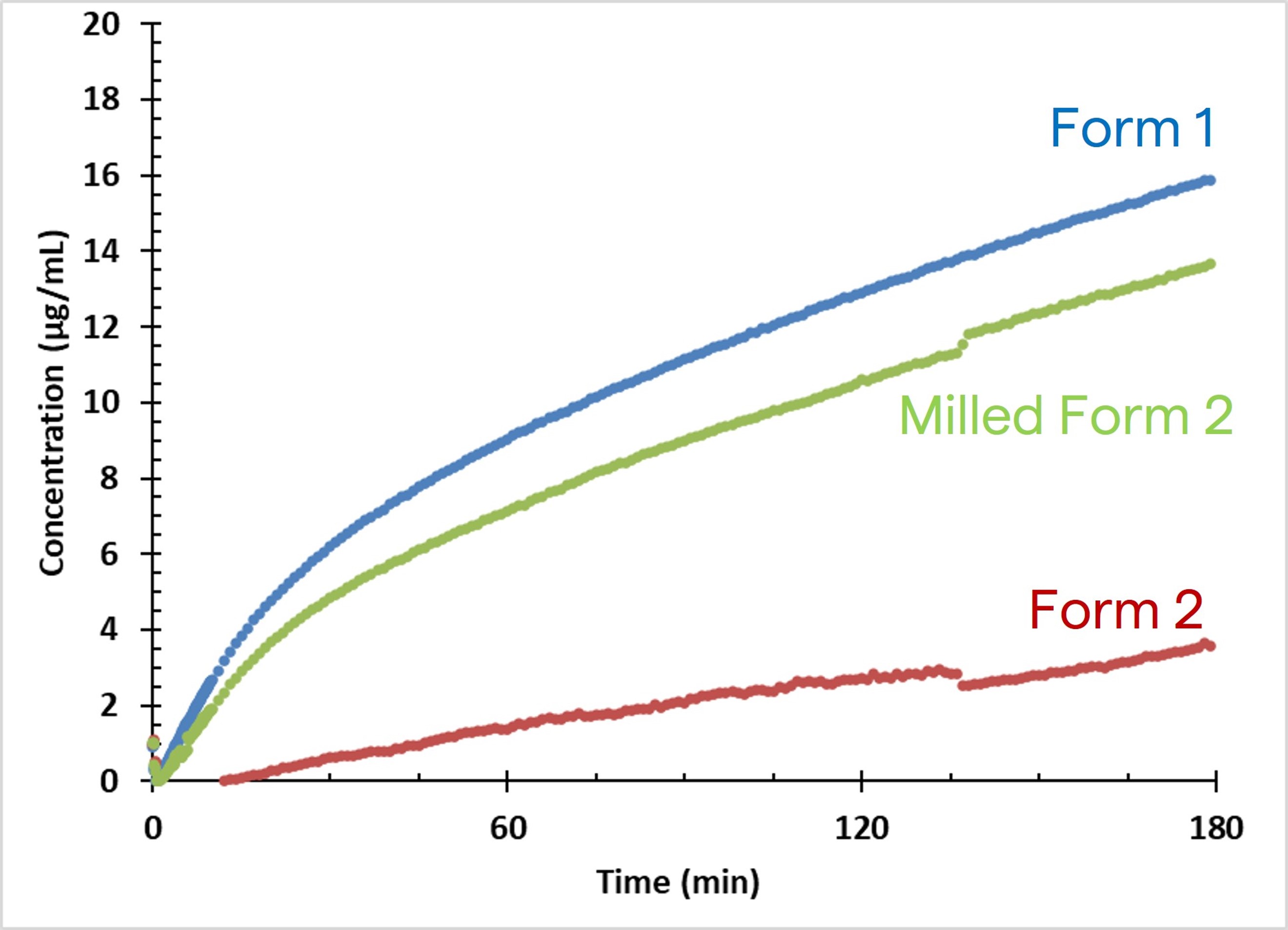
Dissolution curves for drug
Micronized Form 2 matches the performance of Form 1
Final crystallization process for Form 2 of drug

CONCLUSIONS
A robust crystallization process for the thermodynamically favored Form 2 was developed and successfully transferred to manufacturing plant
- Here we show a late-stage application of solid form services for troubleshooting unexpected appearance of a previously unknown form of the drug
- The new form was thoroughly characterized and its stability vs. other form(s) verified before establishing the new form (Form 2) as the one to be developed further (thermodynamically stable)
- Micronization of Form 2 results in matching performance to previously favored Form
- To design a robust crystallization process for Form 2, we utilized three pieces of information: (a) measured metastable zone widths in different solvents; (b) dependency of Form 1 → Form 2 conversion on dielectric constant of solvent; and (c) rate of addition of anti-solvent
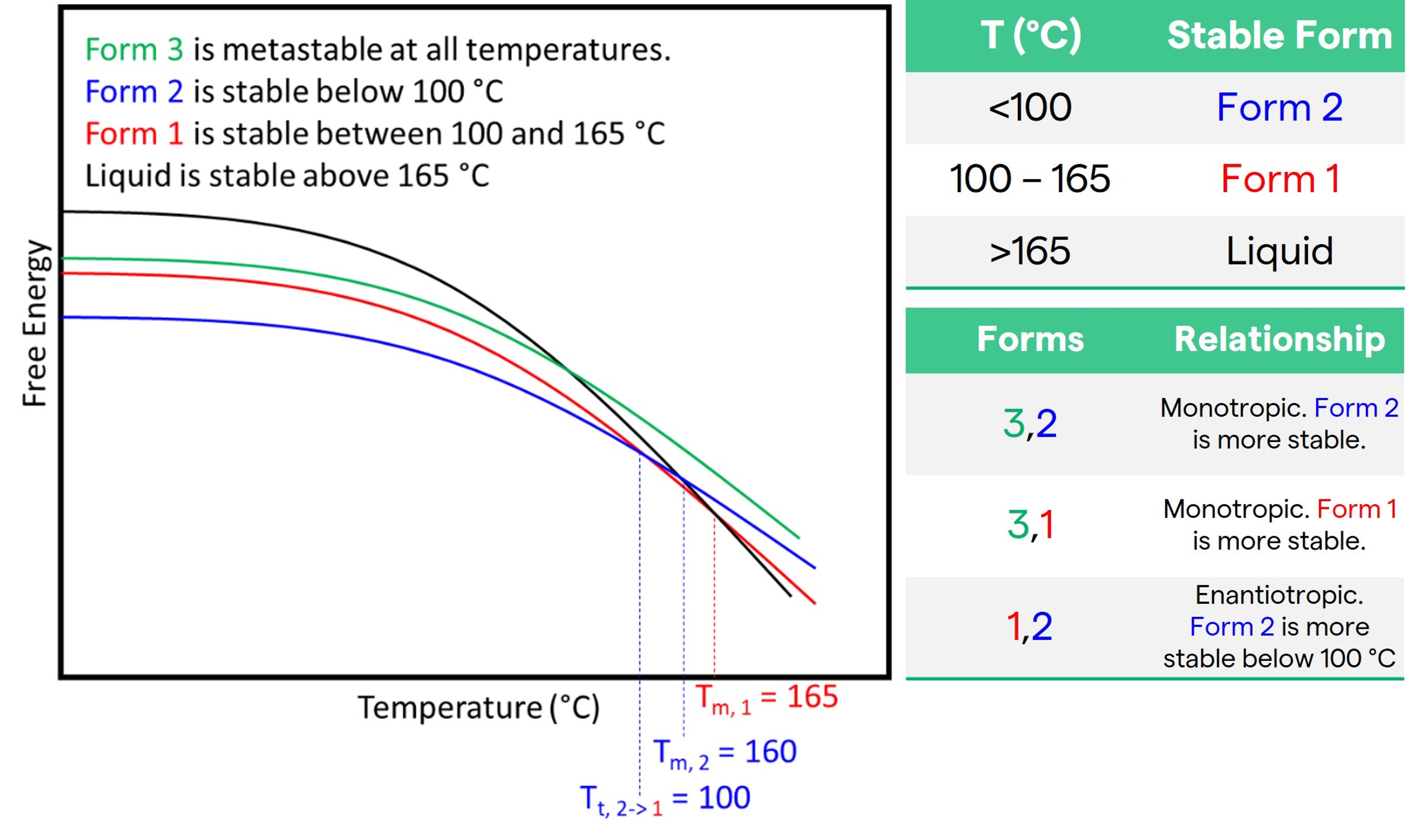
Thermodynamic relationship between different forms
CONTACT INFORMATION: [email protected]
DISCLAIMER
All trademarks belong to Lonza or its affiliates or to their respective third party owners. The information contained herein is believed to be correct and corresponds to the latest state of scientific and technical knowledge. However, no warranty is made, either expressed or implied, regarding its accuracy or the results to be obtained from the use of such information and no warranty is expressed or implied.