Impacts of Polymer Thermal Degradation on In vitro Performance of Amorphous Solid Dispersions
Maria Anderson, Amanda Pluntze
Lonza
PURPOSE
Hot melt extrusion (HME) is a desirable technique for generating ASDs due to its low cost, high throughput, small footprint, and its sustainability with no solvent waste. One of the largest risks of HME is the thermal degradation of drugs and polymers. While drug degradation is a well-documented issue, polymer degradation pathways and changes to physiochemical properties are much less understood.
OBJECTIVES
This study aimed to investigate how HPMCAS-M degradation from thermal processing impacts performance of drug product intermediates.
METHODS
Processing & Characterization
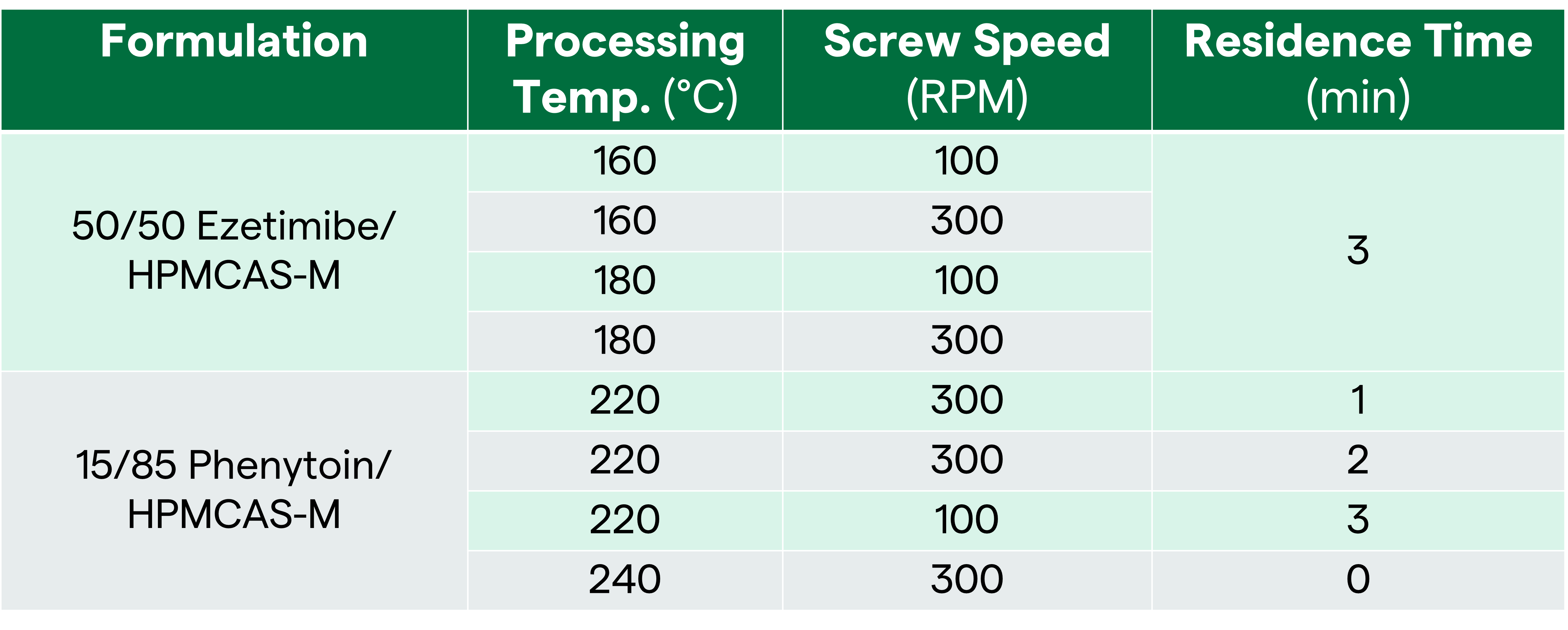
Thermo Fisher's Haake MiniLab 3 was used to process pure hydroxypropyl methylcellulose acetate succinate (HPMCAS) M grade, as well as pre-blended physical mixtures of 50/50 (w/w) ezetimibe/HPMCAS-M and 15/85 phenytoin/HPMCAS-M. Processing conditions are listed in the table below. All ASDs appeared amorphous and single-phase by PXRD and DSC. Drug impurities were quantified via HPLC. Polymer degradation was also quantified via HPLC, by measuring free acetic and succinic acid groups cleaved from the polymer during processing.
PERFORMANCE
Performance of neat ASD powder was analyzed in a non-sink in vitro dissolution test using a Pion µDisso apparatus in phosphate buffer media (pH 6.50) with 0.5% FaSSIF powder. With the same apparatus and media, a sustainment study was performed via a solvent-shift assay, by pre-dissolving HPMCAS-M with varying levels of degradation and dosing an organic solution of unprocessed ezetimibe.
RESULTS
50/50 Ezetimibe/HPMCAS-M
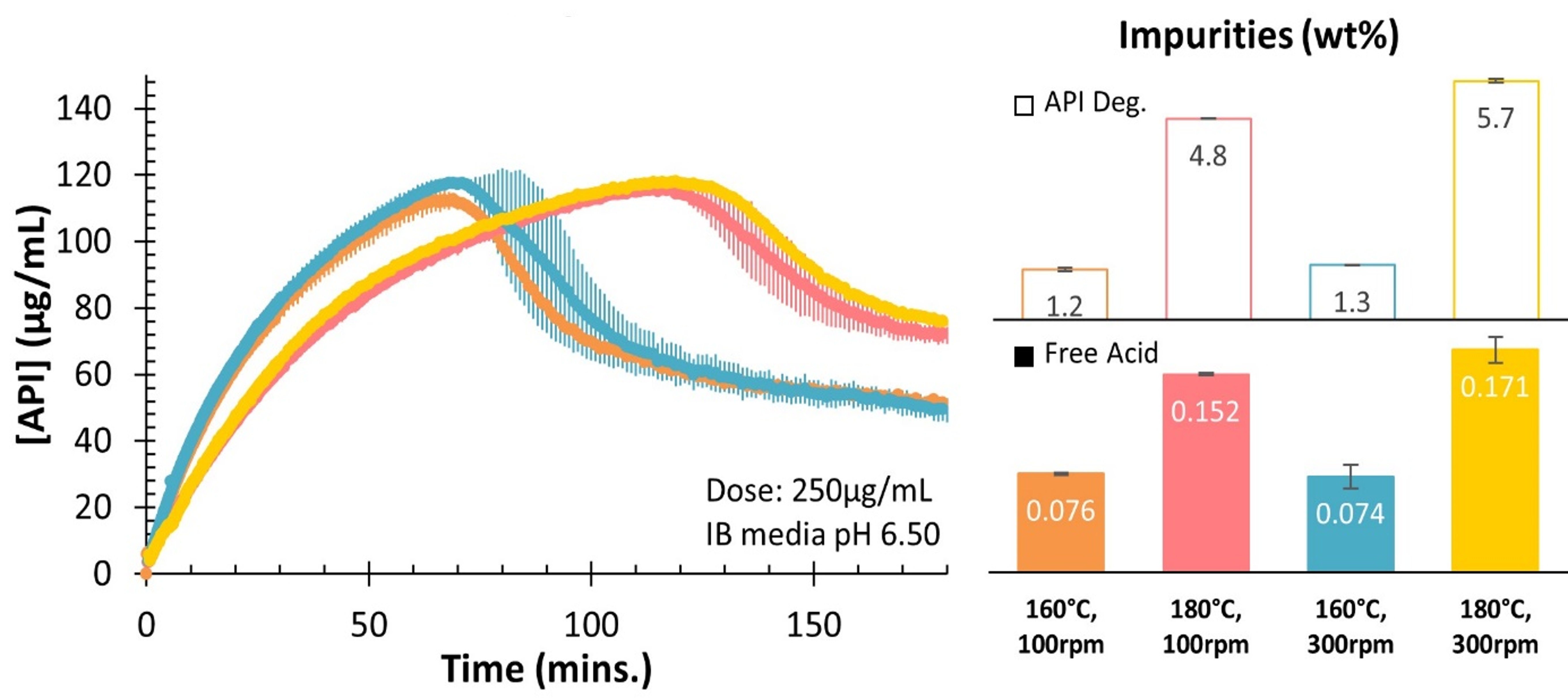
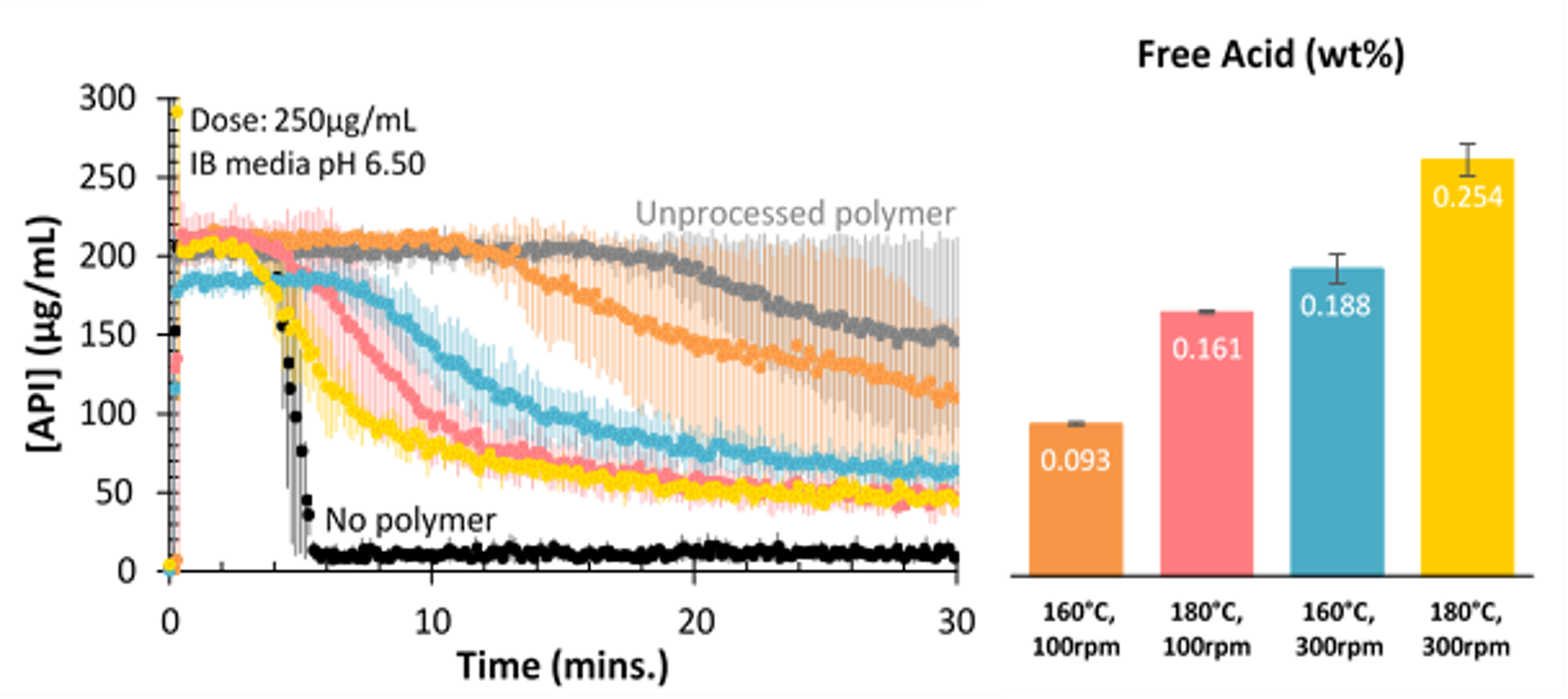
The amount of polymer degradation in ezetimibe ASDs, as measured by hydrolyzed acid content, varied by 2-fold across the four samples. Dissolution curves of 50/50 ezetimibe/HPMCAS-M ASDs with most polymer degradation showed a 2-fold increase in Tmax vs. the least degraded sample (figure 1). Free acid content did not impact Cmax in this system. Studies testing drug sustaining capability of pre-dissolved HPMCAS showed an approximate 30% decrease in sustainment time with the least degraded polymer and an 80% decrease in sustainment time with the most degraded polymer relative to the unprocessed polymer (figure 2).
15/85 Phenytoin/HPMCAS-M
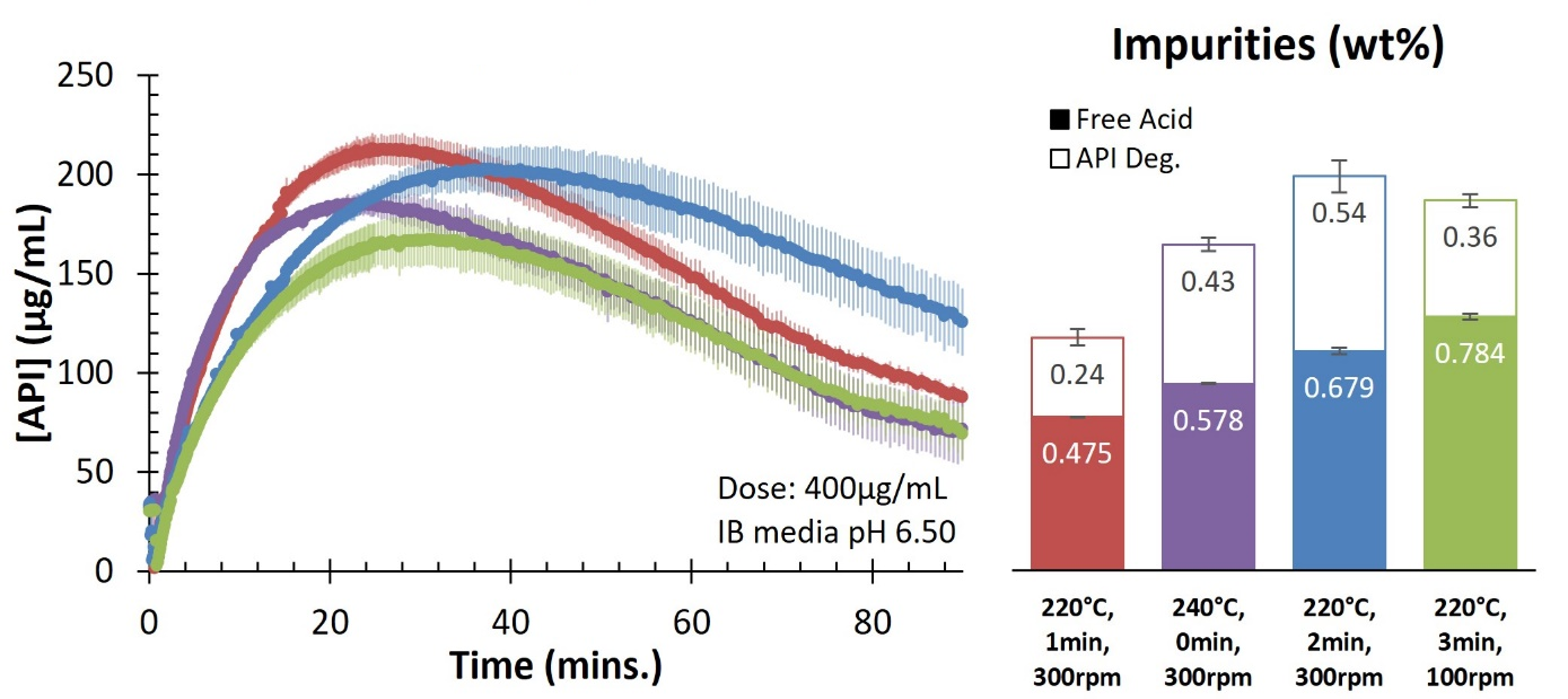
Dissolution curves of 15/85 phenytoin/HPMCAS-M ASDs showed the two less degraded ASDs had approximately 60% faster dissolution rates to reach 25% dose than the two more degraded ASDs (figure 3). Cmax and Tmax did not trend with polymer degradation.
Polymer Degradation Impacts
ASD Performance
PERFORMANCE STUDIES
Dissolution rate is slower with higher levels of polymer degradation.
50/50 Ezetimibe/HPMCAS-M
15/85 Phenytoin/HPMCAS-M
50/50 Ezetimibe/HPMCAS-M Sustainment
HPMCAS DEGRADATION
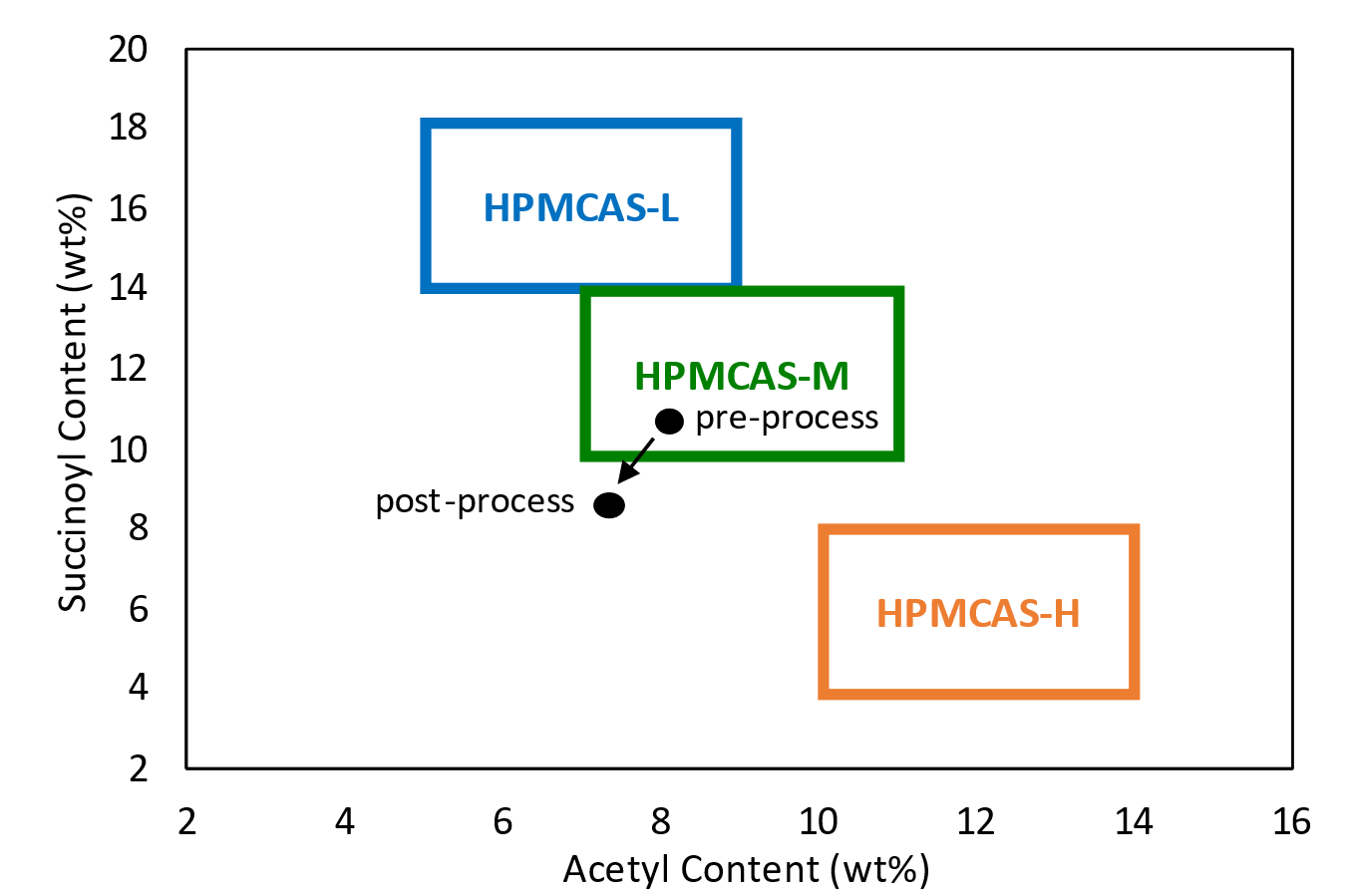
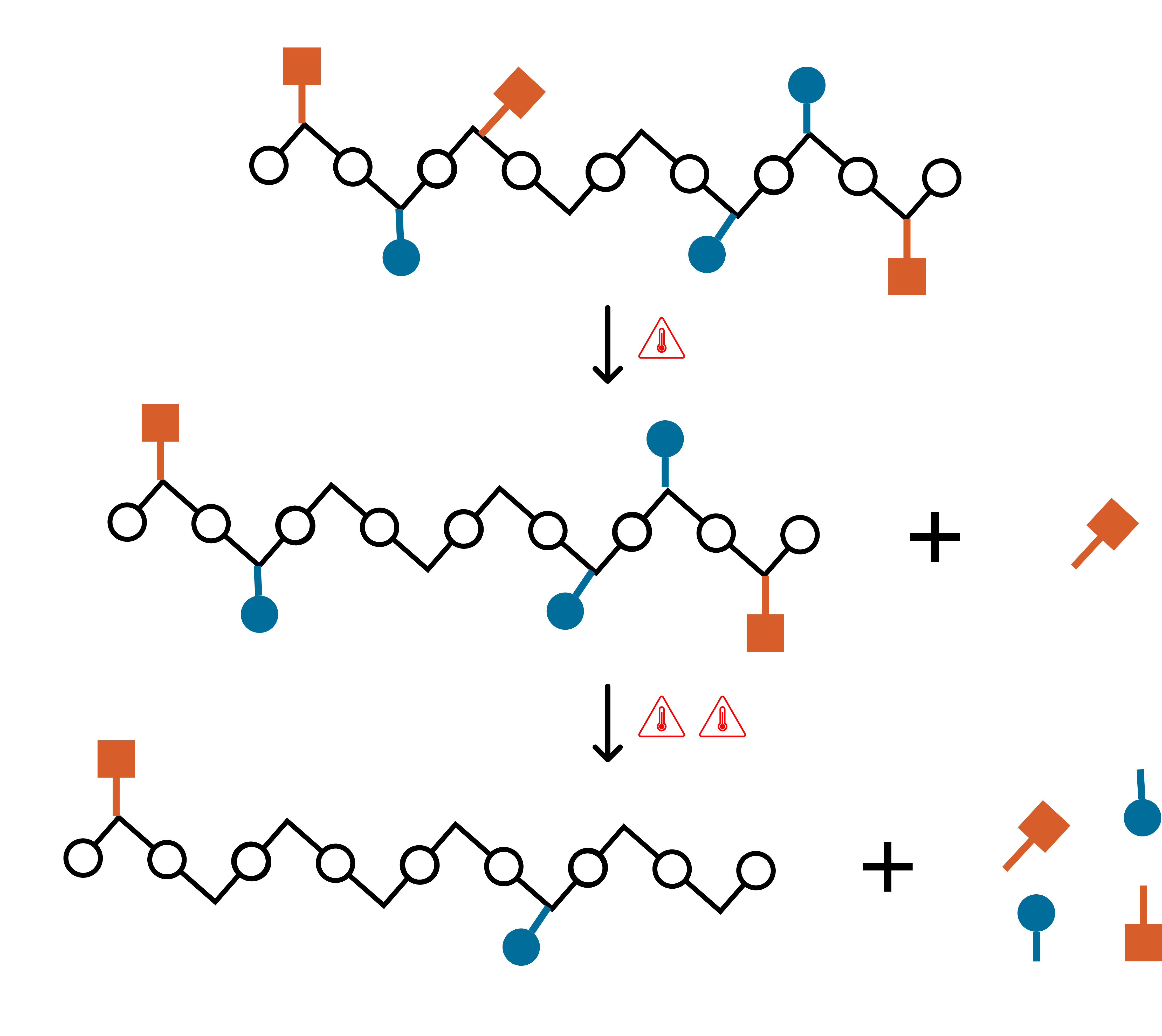
Polymer degradation should be considered when generating ASDs via high temperatures. Cleaving of free acid function groups may push polymers outside of specified ranges in addition to altering the polymer properties.
HPMCAS Grade Specifications
Starting polymer loses succinoyl and acetyl groups when processing at high temperatures.
CONCLUSIONS
In vitro dissolution testing showed polymer degradation impacted ASD performance. An increase in HPMCAS degradation resulted in a decreased dissolution rate of ezetimibe and phenytoin ASDs powders in a non-sink dissolution test. Further, an increase in polymer degradation decreased sustainment time of ezetimibe in a solvent-shift test.
Polymer Degradation Discussion
Higher measured concentrations of free acid indicate less succinoyl and acetyl substitutions compared to unprocessed polymer. Fewer succinoyl groups within HPMCAS reduce its hydrophilicity, in turn decreasing its solubility in aqueous medias. This could explain the slower dissolution rates observed. However, removing acetyl groups has the opposite effect, increasing the polymer's hydrophilicity for a faster dissolution rate but often reducing sustainment time. While further investigation is required to understand the implications and mechanisms of these performance differences, this work demonstrates the importance of determining the impacts of thermal processing on development of robust ASDs.
Contact information: Maria Anderson: [email protected]; Amanda Pluntze: [email protected]
DISCLAIMER
All trademarks belong to Lonza or its affiliates or to their respective third party owners. The information contained herein is believed to be correct and corresponds to the latest state of scientific and technical knowledge. However, no warranty is made, either expressed or implied, regarding its accuracy or the results to be obtained from the use of such information and no warranty is expressed or implied.