Super Material-Sparing HME Screening:
Simultaneous API Loading and Degradation Predictions
Amanda Pluntze, Scott Beecher, Maria Anderson, Dillon Wright
Lonza
PURPOSE
Hot melt extrusion (HME) offers a high throughput process to manufacture amorphous solid dispersions.
HME Relevant
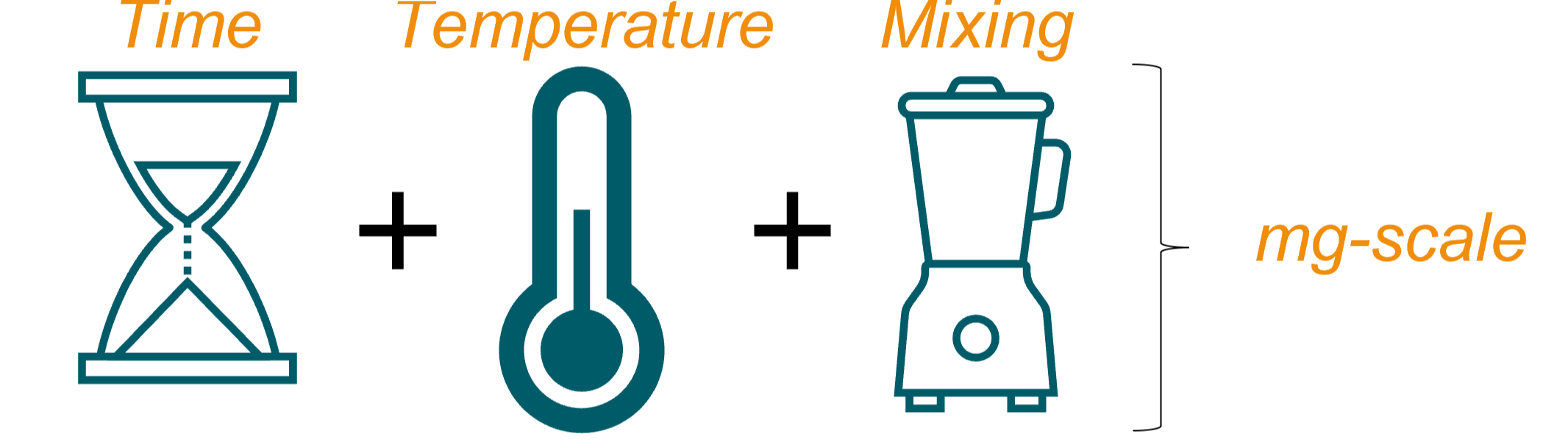
A variety of experimental and model-based approaches exist to predict API solubility in polymer melts, but these methods are typically aimed at determining the thermodynamic solubility and do not take into account kinetics of dissolution or the associated degradation of the API during thermal processing, both of which are critical considerations to generating a successful amorphous solid dispersion by HME.
Micro compounders are the current industry standard for small-scale HME feasibility screening, yet still require gram-scale quantities of material per run, which can lead to substantial material burden. This work aims to develop a material sparing approach for screening a given pharmaceutical active for hot melt extrusion with physically relevant parameters.
METHODS
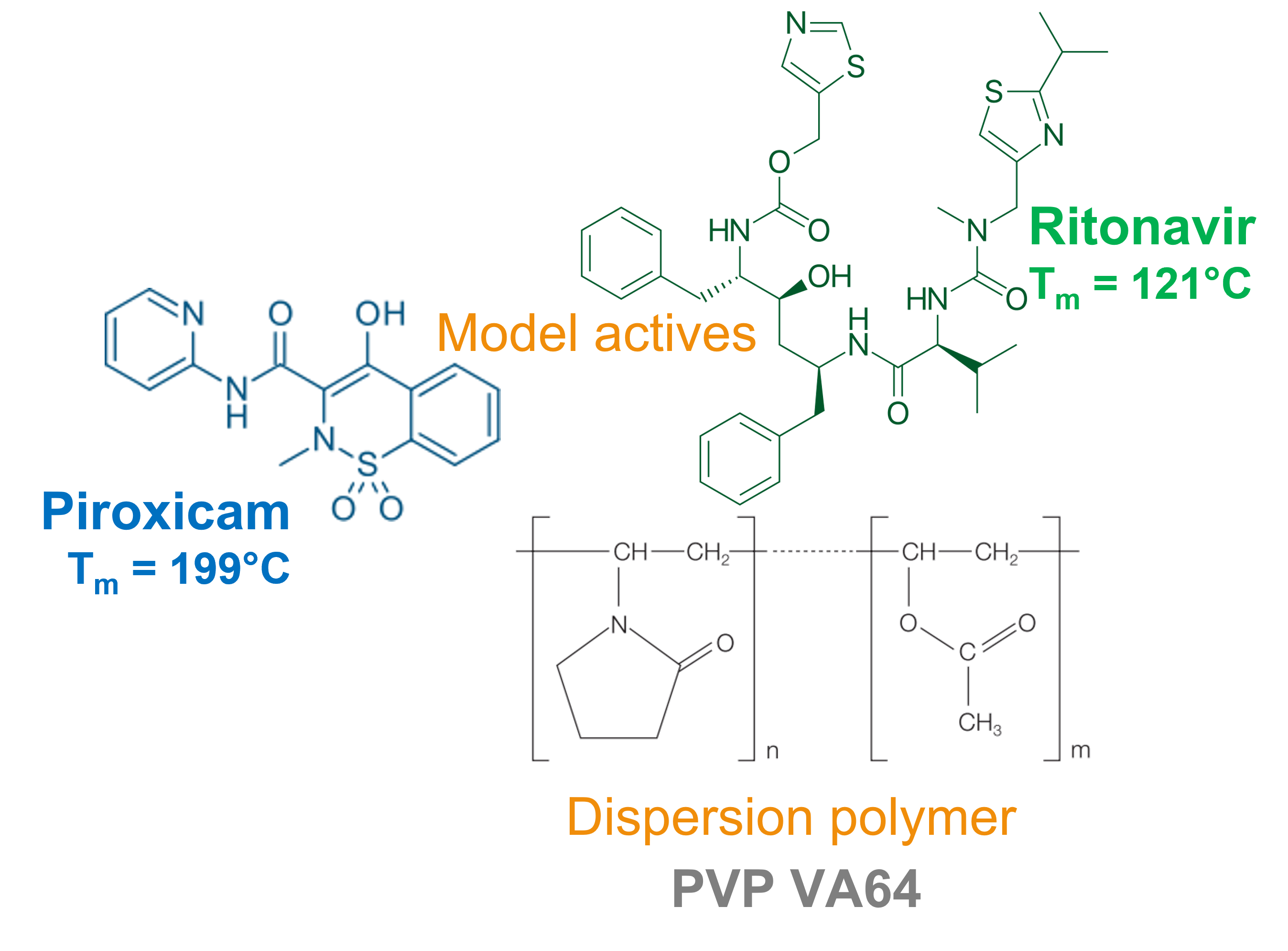
- Determine maximum processing temperature of degradation limiting component:
- Gravimetric (TGA)
- Visual
- Process 200mg physical mixture with MiniMixer.
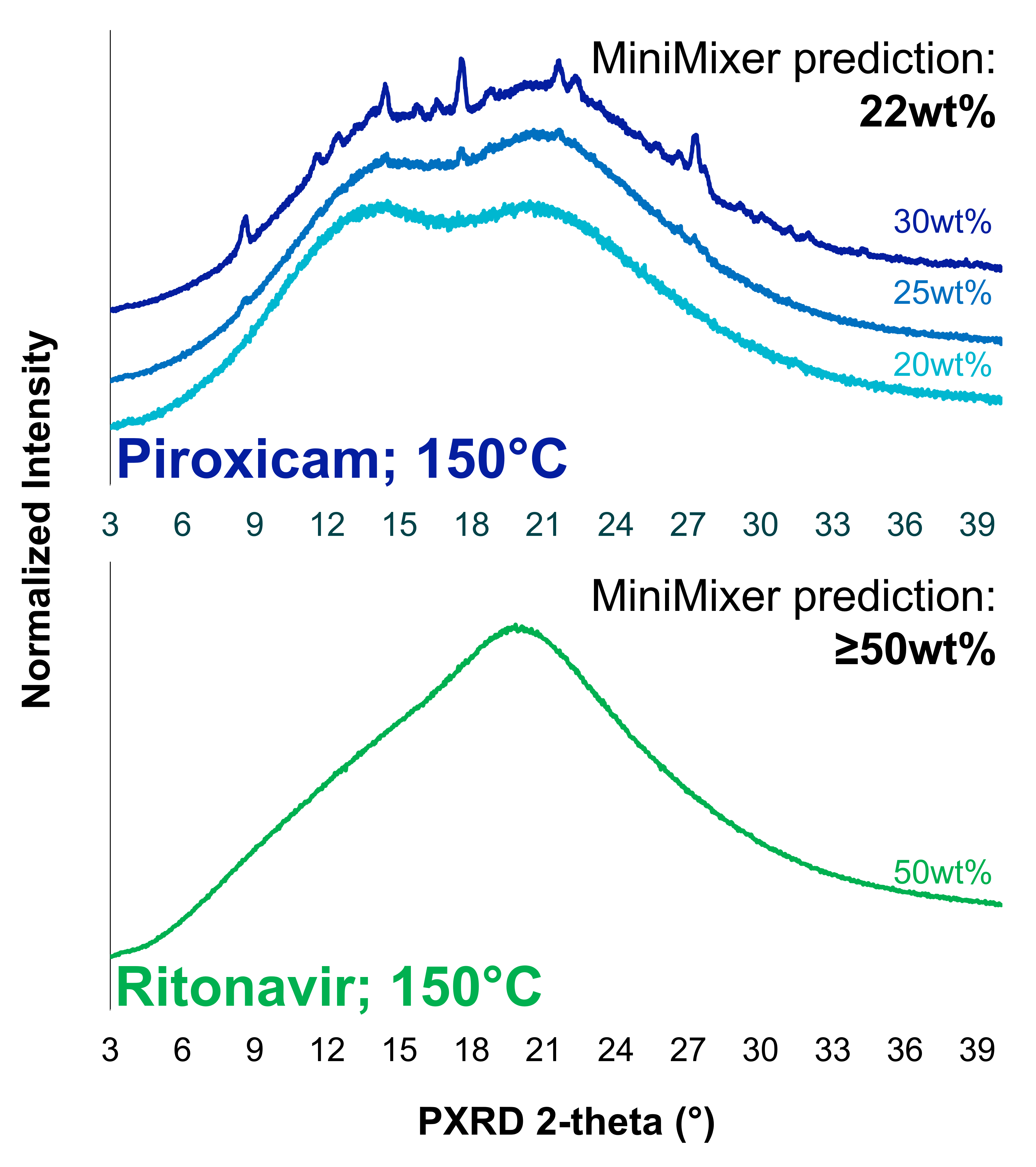
- Quantitate residual crystalline signal by powder X-ray diffraction (PXRD) to determine amount of solubilized API.
- Test MiniMixer predictions
- Process 6g physical mixtures of varying API wt%
- Process with the ThermoFisher Haake MiniLab 3 micro compounder (3 minutes, 200rpm)
- Analyze by PXRD analysis.
- Compare degradation profiles by high performance liquid chromatography.
RESULTS
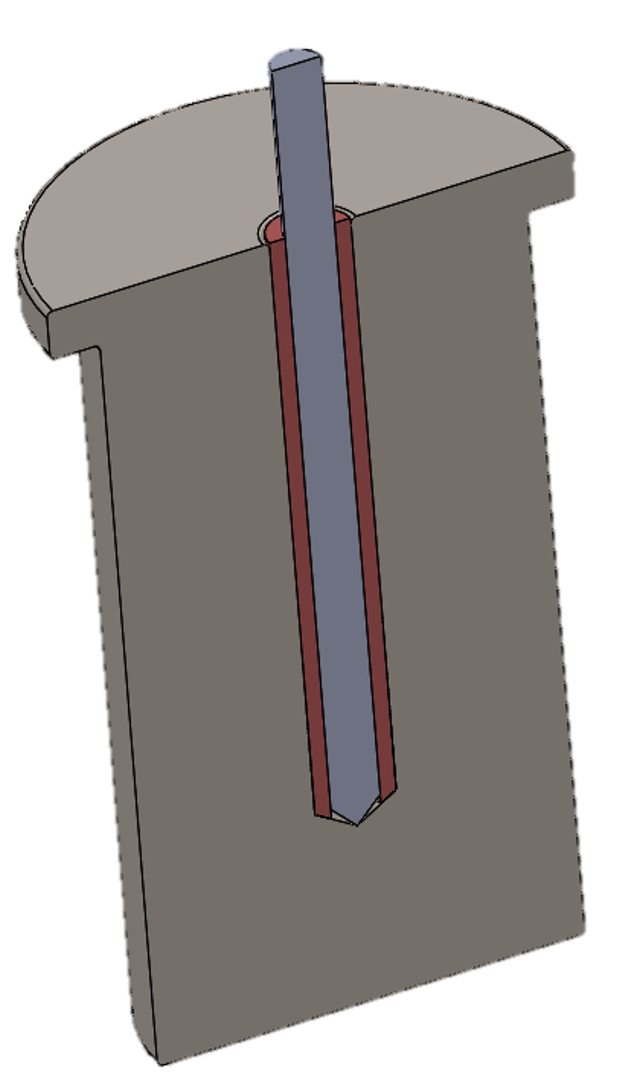
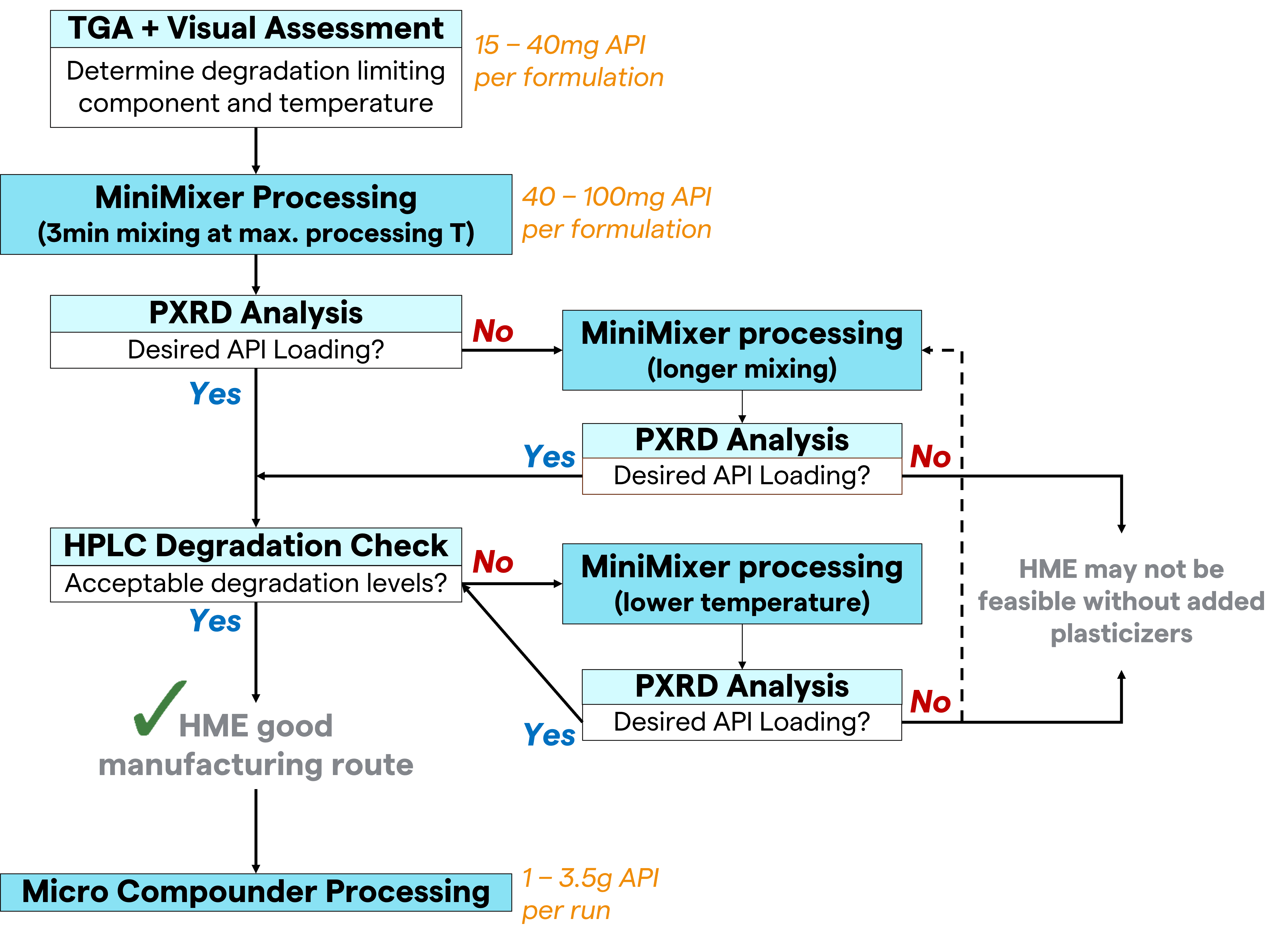
HME screening with only 100mg of API
Achievable API Loading
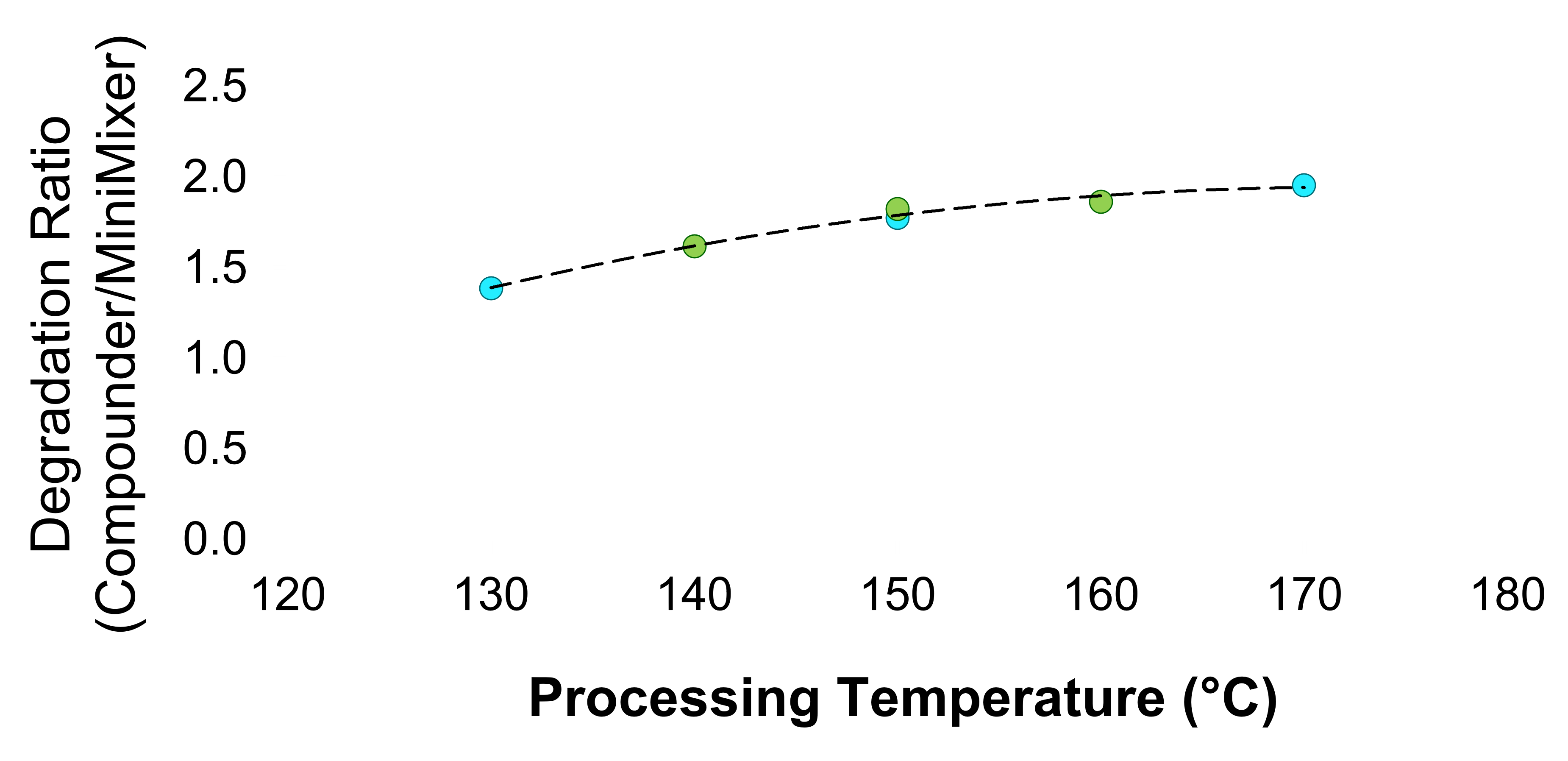
Degradation
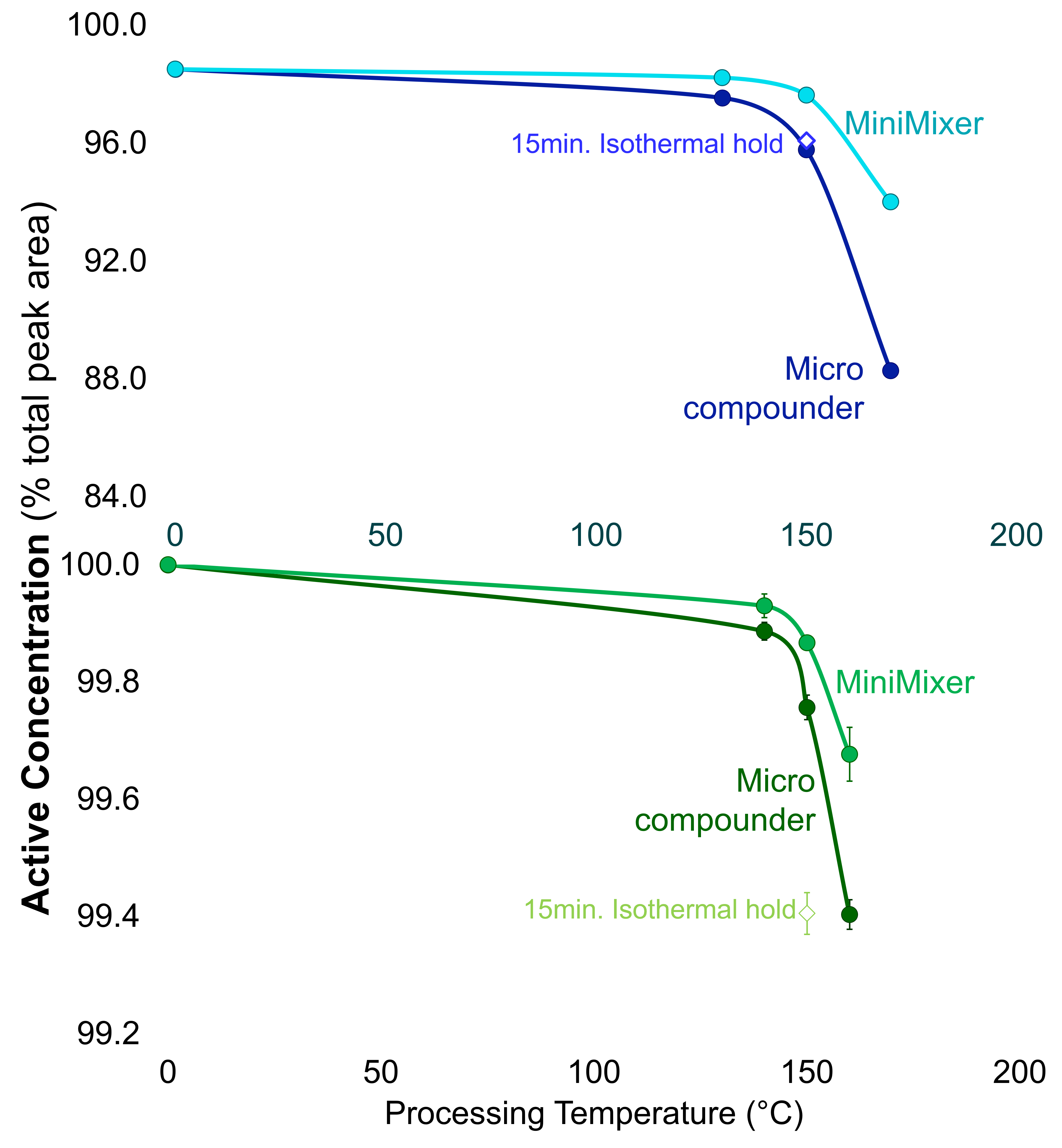
Mixing is critical
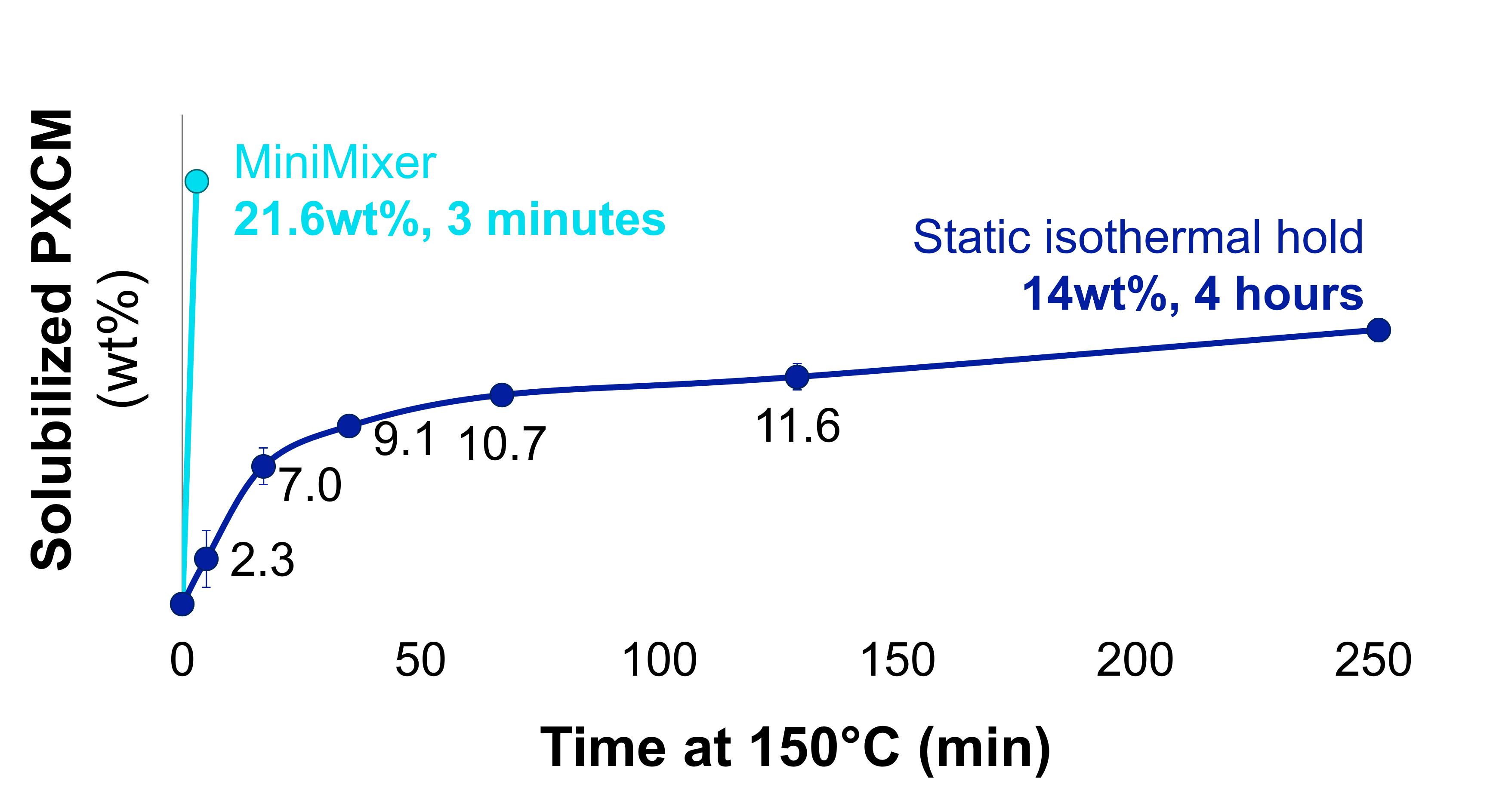
API independent degradation predictions
CONCLUSION
We present a screening flowchart and simple device that allows rapid formulation screening using HME-relevant time, temperature, and mixing conditions to predict achievable API loading and expected degradation. This method utilizes shorter experimental times, simplified sample preparation, has good correlation to processing with a micro compounder but requires only ~100mg of API!
DISCLAIMER
All trademarks belong to Lonza or its affiliates or to their respective third party owners. The information contained herein is believed to be correct and corresponds to the latest state of scientific and technical knowledge. However, no warranty is made, either expressed or implied, regarding its accuracy or the results to be obtained from the use of such information and no warranty is expressed or implied.